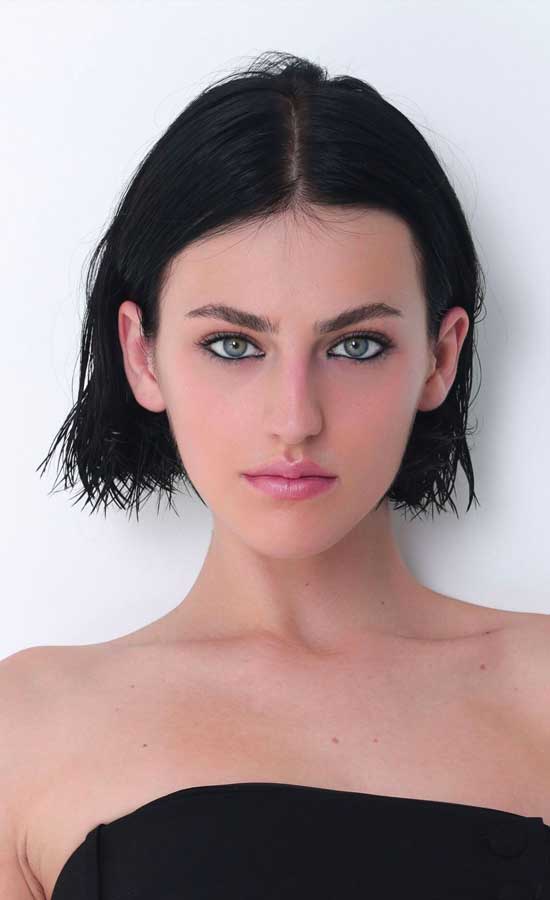
New York Fashion Week Dates: Fashion Show, Designer, Trade Fairs and Events
Who believes that the New York Fashion Week is primarily a spectacle for fashion editors and street style photographers is fundamentally mistaken. Behind the scenes, one of the most efficient career machines in the entire fashion world is running — and whoever knows the rules can use them strategically. The event generates around 900 million dollars annually for New York City. Over 230,000 overnight stays are booked. Hundreds of shows, showrooms, and off-schedule events form a dense network that can decide careers within a few days. This article shows you how the system really works — with dates, structures, and concrete career steps.
When does the New York Fashion Week take place?
The NYFW takes place twice a year — in February for the autumn/winter collections and in September for the spring/summer season. The shows last about a week each, with the official calendar of the Council of Fashion Designers of America (CFDA) setting the framework. What matters: The NYFW traditionally opens the international show calendar — it is the starting signal for the entire Fashion Month sequence, which ends with the London Fashion Week, the Milan Fashion Week, and finally the Paris Fashion Week. This rhythm — New York, London, Milan, Paris — is simply called the Big 4 in the industry.
February vs. September: What is the difference?
For models, stylists, and newcomers, the September date is more important. Why? In September, more up-and-coming designers and emerging labels present their collections. The competition among established houses is lower, as some top designers have already adjusted their show schedules. In February, on the other hand, the big names dominate — access is harder, and expectations are higher.
Off-Schedule Events: The Underrated Career Lever
Alongside the official CFDA calendar, there exists a parallel universe of presentations, showroom appointments, and pop-up events. Many of these off-schedule formats are specifically looking for fresh faces — agencies recommend newcomers to actively scout and present themselves here. Anyone seriously pursuing the path to Model in New York should not underestimate this part of NYFW.
The Structure Behind the Shows: How It Really Goes Down
A fashion week calendar lists shows. What it doesn’t list: the weeks of preparation beforehand. For modeling agencies, the real NYFW starts six to eight weeks before the first show day. During this phase, Go-Sees and castings take place — and exactly here, the decisions are made.
| Phase | Time before the Show | What happens | Who is in demand |
|---|---|---|---|
| First Castings | 6–8 weeks in advance | Designers review agency boards | Agency-affiliated models |
| Go-Sees | 4–6 weeks in advance | Personal presentation at the designer’s | Models recommended by the agency |
| Fitting Castings | 2–3 weeks in advance | Body measurements are checked | Narrower selection |
| Final Castings | 1 week in advance | Final decision, runway rehearsals | Booked models |
| Show Day | 0 | Hair, makeup, runway, press | All confirmed models |
What this process shows: Without an agency, you simply won’t be visible in the first three phases. This isn’t an opinion — it’s industry standard. Those who wonder what a serious model agency looks like and why it’s so crucial will find the foundation for every next step there.
Starting a career through the NYFW: What you really need
The most common misconception: You apply for the Fashion Week. Wrong. You are booked for the Fashion Week — and that requires a functioning agency relationship. The path there isn’t romantic, but clearly defined.
Physical requirements: What New York actually demands
Runway shows of the NYFW work with standardized measurements set by the designer for his samples. In practice, this means that editorial and runway models have a height of 175–182 cm and a clothing size of 34–36. Anyone who is not yet fully familiar with model measurements and requirements should first get information there. For curvy formats and presentation formats, there are specific standards — this segment is growing, and labels like Christian Siriano have used the NYFW multiple times to explicitly showcase size diversity. Anyone thinking in the direction of curvy model will find the specific possibilities there.
Portfolio, Application, Agency — in this order
No designer reviews initial applications. The process always goes through an agency. This means: first, create a professional model portfolio for casting, then apply specifically for casting, then agency — not the other way around. Anyone who wants to prepare for casting will find a structured introduction there.
“New York is not a city that waits for you. You appear prepared — or you don’t appear at all. The models who make it here have already done hundreds of castings before their first NYFW show. This is not an exaggeration.”
— Experienced Booker from a New York agency with an international roster
International Perspective: From Germany to New York
For German models, the path to NYFW is clear: first, establish a local agency — whether Model agency Berlin, Model agency Hamburg or Model in Frankfurt — and from there build Mother/Sister-Agency connections to New York. Many international agencies have established partner structures in the US. Those who have not yet taken this first step can find clear guidance under Become a model step by step.
NYFW as an Economic Engine: Numbers That Change the Strategy
900 million dollars of economic output mean: NYFW is not an event — it is an industry. This changes how you should strategically look at it. For models, this means specifically: In addition to runway bookings, there are accompanying formats such as campaign shootings, advertorials, and live-streaming content that are created in parallel to the actual show. Those who model as a side job can use precisely these accompanying formats as an entry point, without immediately being in a full-time structure.
Regarding earnings: What a runway booking at NYFW brings varies greatly — from a few hundred dollars for newcomers to five-figure amounts for established names. More about the exact numbers under How much does a model earn. Important here: Agencies that demand fees in advance are a warning sign. Those who want to know whether a model agency may charge fees, can read about it there — or directly under Model agency without fees.
Your NYFW Career Checklist
- ☐ Check and realistically assess prerequisites
- ☐ Have professional application photos taken
- ☐ Build a portfolio according to agency standards
- ☐ Research a reputable local agency
- ☐ Arrange and prepare for a casting appointment
- ☐ Check the agency contract for hidden costs
- ☐ Inquire about mother-agency structures in NY
- ☐ Complete runway training
- ☐ Know the NYFW calendar and lead times
- ☐ Actively follow off-schedule events
NYFW in the context of international Fashion Weeks
Anyone who wants to use NYFW as a springboard should understand the entire Fashion Month logic. A model booked in New York may be on the runway in Paris three weeks later — if the agency structure is right. The four Fashion Weeks are not isolated events, but an integrated system. The Big 4 Fashion Weeks overview shows how the system is connected. Those looking to enter through a European Fashion Week will find the Fashion Week Berlin a more realistic first stop — there the barriers for newcomers are lower, but the contacts are just as valuable internationally.
Who wants to take the first step concretely: Apply now and start the process with a verified agency.
Frequently asked questions about the New York Fashion Week and career entry
Can I apply directly to NYFW designers as a model?
No. Designers work exclusively with agencies. Direct applications are generally not considered. The only working way is an agency with proven contacts to New York designers. If you don’t have an agency yet, start with an overview of the requirements and the correct cover letter for a model agency.
What measurements do I need for the New York Fashion Week?
For runway bookings, the general rule applies: height 175–182 cm, clothing size 34–36, maximum hip size 90 cm. These measurements are based on the samples of the designers. For presentations and curvy formats, other standards apply — more information can be found under Minimum height model agency and Model agency without minimum height.
How far in advance do NYFW castings take place?
Agencies start the scouting process six to eight weeks before the first show day. The actual Go-Sees take place four to six weeks before the show. Anyone who wants to be booked in New York must therefore be agency-bound and actively involved in the casting process at least two months in advance — not just shortly before.
Is the NYFW also relevant for Plus-Size and Curvy Models?
Yes, and the share is growing measurably. Labels like Christian Siriano, Chromat, and others have specifically used the format to showcase inclusive sizing collections. Anyone positioning themselves as a model in larger sizes has concrete opportunities in the NYFW calendar today — provided the agency has the appropriate contacts. Under Top Model Agencies at a Glance, you can check which agencies actively represent this segment.
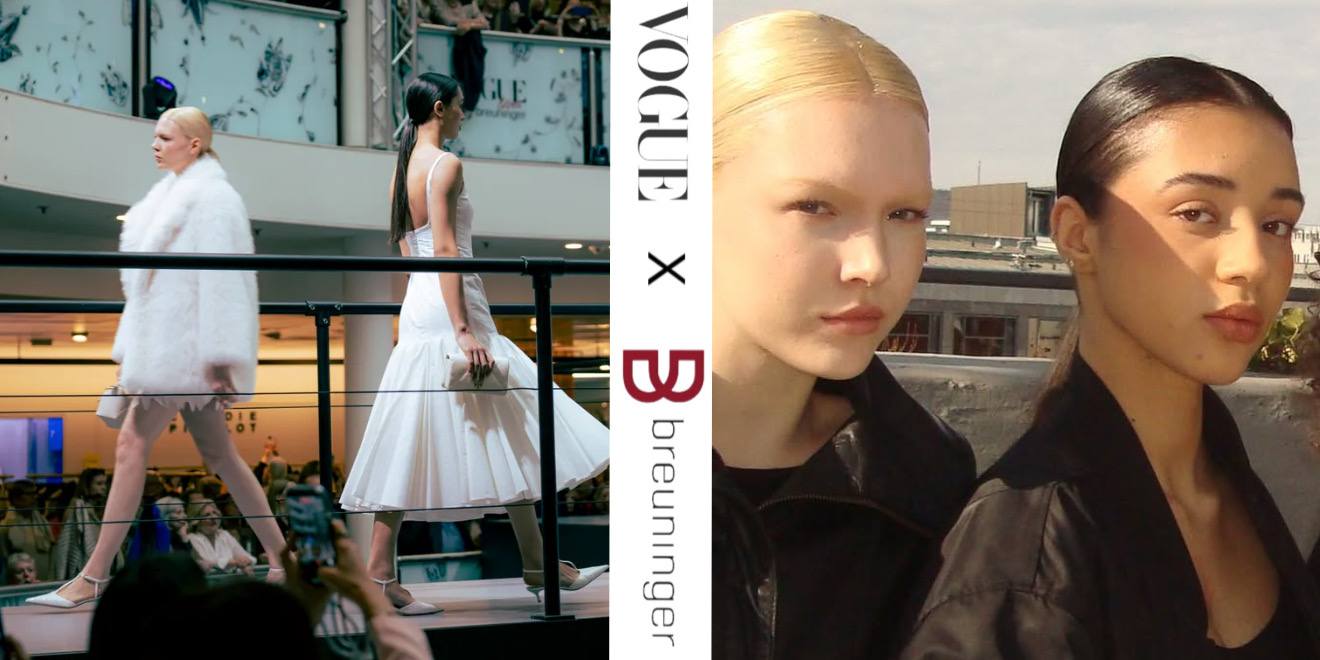
Runway Debut: Ariane and Luisa for Vogue x Breuninger
Fashion Week Berlin 2025: shows, calendar, dates + live from Berlin
Vivienne Westwood Videos: Elegance and Punk United

Media Agency: Advertising, Shooting and Social Media Marketing
Philipp Plein: Luxusmarke, Designer & Geschichte
Gant: Lifestyle-Marke, Sportmode, Düfte & Home-Collection