









Model agency for children – Find the perfect children’s model agency
Parents who want to register their child with a model agency make a mistake with consequences: they simply look for the next agency — without knowing that the children’s department has its own rules, its own protection laws and a completely different booking logic. A wrongly chosen children’s model agency costs time, nerves and, in the worst case, money. This article explains what really matters.
What distinguishes a children’s model agency from other agencies
The biggest misconception is viewing a children’s model agency as a smaller version of an adult agency. This is not true. Children are subject to the Youth Labor Protection Act, shoot days are limited to a few hours, and clients — from fashion brands to online retailers — are aware of this. Agencies representing children must set up their own production processes, actively involve parents, and still deliver. This significantly filters the market. Many large agencies do not have a children’s division because the effort is high and the margins are smaller. If you want to register your child with a serious model agency, you need to search specifically — not just inquire with the most well-known agency.
- Youth labor protection limits shoot days
- Parents must be present during bookings
- Fewer agencies have a genuine children’s division
- Different booking logic compared to adults
Age groups and what they mean
Children’s modeling agencies differentiate internally very precisely by age groups, because clients have specific requirements. A baby catalog needs children between 6 and 18 months. A school catalog looks for children between 6 and 10 years old. Whoever understands this segmentation can better assess how relevant an agency is for their own child.
| Age Group | Typical Jobs | Special Features |
|---|---|---|
| 0–3 years (Babies) | Baby clothing, diapers, baby food | Parent always present, short shoot days max. 2h |
| 4–8 years (Toddlers) | Children’s catalogs, TV spots, school bags | Playful approach, patience during casting |
| 9–12 years (Tweens) | Fashion, school supplies, sports | Child’s first conscious initiative is important |
| 13–15 years (Teens) | Teen fashion, campaigns, online content | Transition to teen model area, different rules |
Physical Requirements — and how they differ from adults
Unlike modeling for adults, where minimum height requirements at modeling agencies and model measurements play a central role, children are primarily judged on proportions, natural charisma, and the ability to remain relaxed in front of the camera. No serious client expects an 8-year-old child to achieve runway perfection. Those who want to learn more about modeling requirements will find a good overview there — but different standards apply in the children’s modeling sector.
Recognizing a serious children’s modeling agency — warning signs and quality features
The market for children’s model agencies unfortunately also attracts black sheep, because parents are emotionally invested and sometimes react poorly to warning signs. An important rule of thumb: Finding a model agency without fees is realistic — anyone who asks for money upfront is usually not a genuine agent. The question of whether a model agency may charge money can be clearly answered: not in advance for serious intermediary services.
“Once an agency asks for advance payments for photoshoots or portfolios before the first casting has taken place, that’s a reliable warning sign. Reputable agencies only earn once the child is working — not before.”
Checklist: Quality Features of a Children’s Modeling Agency
- ☐ No upfront fees or mandatory photo shoots
- ☐ Clear contract with notice periods
- ☐ Parents are included in all bookings
- ☐ Nachweisbare Referenzen (Kampagnen, Kunden)
- ☐ Accessibility and transparent communication
- ☐ Information on youth labor protection available
- ☐ Clear information about the commission (industry standard: 15–25 %)
- ☐ No pressure on parents during the first meeting
Regional presence vs. nationwide reach
Many parents think locally first. That’s understandable, but not always correct. Those living in Berlin naturally benefit from a model agency in Berlin with local contacts. Those in the north look to the model agency Hamburg. But the key question is: Which agency has real customer relationships with children’s fashion brands and publishers? An agency with an office in a major city and active contacts with buyers is more valuable than a local agency without a booking history in the children’s sector.
- Local agency ≠ automatically more jobs
- Relevant customer contacts more important than ZIP code
- Nationwide agencies often have a broader setup

The application process at a children’s model agency
Who wants to present their child to an Agency should know that the process differs from an adult Application. A detailed Model portfolio for casting is usually not needed in the children’s area. Current, natural photos in good resolution are sufficient for a first Application. Important: no exaggerated staging, no make-up, no costumes. Clients want to see the child, not a costume.
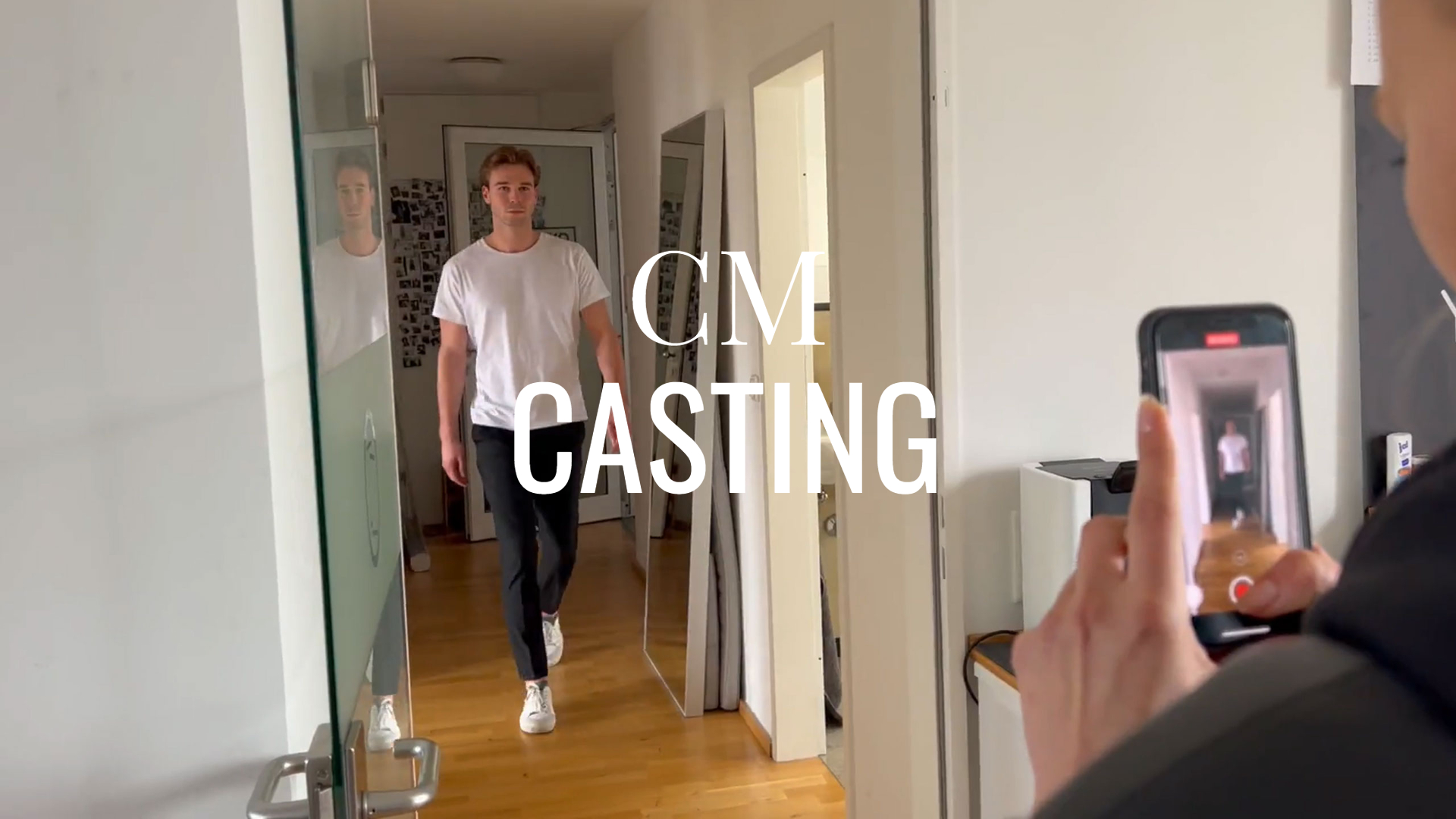
The next step is usually a casting or a personal meeting. How to properly prepare for casting applies to children as well — with the difference that here the parents do the preparation. The child itself should be relaxed and rested, not instructed or rehearsed. Agencies and clients immediately notice whether a child acts naturally in the casting or recites instructions from the parents.
- Compile natural photos (3–5 are sufficient)
- Short profile with age, height, shoe size
- Online Application or Contact via email
- Wait for an invitation to the casting
- Take the child relaxed and without pressure
What is really evaluated during casting
At casting at CM Models and comparable agencies, naturalness is most important for children. Children who laugh freely, maintain eye contact, and don’t move stiffly in front of the camera receive feedback — regardless of whether they match classic model proportions. The agency also evaluates how parents interact with the child: relaxed, supportive parents are a positive signal for future cooperation during bookings.
- Naturalness beats perfect pose
- Parents’ behavior is also observed
- No preparation for standard poses is needed
What children can earn with a children’s modeling agency
Here, fantasy often reigns on both sides — too high expectations from parents, deliberate silence from agencies. Clear figures: child models earn between 100 and 600 euros per shooting day, depending on the job, and sometimes even more in exceptional cases. Large campaigns for well-known brands pay more, while local catalog productions pay less. Those who want to know how much a model earns will find a detailed overview there — similar structures apply to children, but daily rates are generally lower than for adult models. The agency’s commission is industry-standard between 15 and 25 percent.
- Daily fee: 100–600 € depending on the job
- Agency commission: 15–25 % usual
- No stable income — jobs are irregular
- Payments are made after the invoice is submitted
Anyone planning to model as a stable source of income will be disappointed. Even for actively booked child models it applies: Modeling remains a side activity — school, family, and free time take priority. Agencies that communicate it differently should be critically questioned.
Frequently asked questions about child modeling agencies
From what age can a child work with a model agency?
Technically, babies from a few months can be booked — the market exists. Practically, serious agencies recommend starting around the age of 4, because children can then handle their first castings without being overwhelmed. The Youth Labour Protection Act sets clear limits for working hours depending on age, and good agencies consistently know and respect these limits.
Does my child need special experience?
No. Experience is not a criterion for children. No prior experience, no acting lessons, no dance classes — this is not a disadvantage. What matters: natural charisma, openness towards strangers and a stable, relaxed parent in the background. Those who think their child needs prior training are spending money on something no agency requires.
Can the agency demand a photoshoot in advance?
No — at least not as a paid mandatory requirement before the first job. If an agency demands a professional portfolio as a prerequisite for joining their roster and charges for it, that’s a red flag. Natural parent photos are sufficient for the initial application. Only once an agency has taken the child on, professional photos can be meaningful — but they should be communicated voluntarily and transparently.
How long does it take for a child to get their first job?
Realistic expectation: between 2 and 6 months after joining an agency. The market for child models is smaller than many think, bookings run seasonally (spring/autumn for catalogs), and even active agencies don’t have suitable jobs for every child every week. Switching agencies after a month without a job is a mistake. If after a year there hasn’t been a single contact, it’s entirely reasonable to inquire.

Modeling in China BTS: Gaia (Paris), Her Experiences as a Model in Beijing x Shanghai

Modelagentur Casting am 22.06. in Berlin Mitte: Pre Fashion Week Berlin
Model Casting Barcelona 11.03.2025 - apply now! Date & registration

UFC Sport Kampagne in Seoul mit Simon

Models.com x CM Models Management

Vanity Fair Magazin mit Diletta Busin