Karl Lagerfeld: Jean Patou, Chloé, Fendi and Chanel
He powdered his hair white, hid his eyes behind dark glasses, and wore gloves even when others had long since appeared sleeveless. Karl Lagerfeld was a walking art installation – and at the same time, arguably the most productive fashion creator of the 20th century. What set him apart from every other designer: he didn’t just save a fashion house, he saved four. Jean Patou, Chloé, Fendi and Chanel – each of these Maisons bore his fingerprint, each was redefined by him. Anyone who wants to understand how fashion really works must understand how Lagerfeld worked.
Jean Patou: The first big commission and a lesson in style
Hardly anyone remembers today that Karl Lagerfeld began his career in a house that did not bear his own name. At Jean Patou, he took on responsibility for collections that balanced between elegant conservatism and the hunger for modernity. Patou was, at the height of his career, one of the most respected addresses of Parisian Haute Couture – known for sporty elegance, flowing silhouettes and the legendary “Joy”, one of the most famous perfumes in history. Lagerfeld learned here something that would accompany him throughout his life: respect for a brand’s heritage and at the same time the ability to reinterpret this heritage freshly, without breaking it.
What Lagerfeld developed at Patou was not a style – he already had that. It was discipline. The ability to think for a foreign house, to speak in a foreign language and yet remain recognizable. This discipline became the foundation of his later parallel careers.
- Patou stood for sporty Haute Couture
- Lagerfeld learned brand respect and renewal
- The perfume “Joy” shaped the house image
- Early collections shaped Lagerfeld’s design language
Chloé: Where Lagerfeld Invented Lightness
The Birth of the Ready-to-Wear Mindset
At Chloé, Karl Lagerfeld did something that few in the fashion world would have thought possible: he made luxury wearable. Chloé was not a couture house, but one of the first real ready-to-wear labels with genuine ambition. Lagerfeld created collections there that flattered women without constraining them – flowing fabrics, romantic details, a lightness that reflected the spirit of the emancipated woman. Anyone who knows the Chloé aesthetic of the Lagerfeld era knows: this was not a compromise between comfort and style, this was their fusion.
Lagerfeld remained connected to Chloé for decades – with a brief interruption. This loyalty was characteristic. The house gave him freedom, and he gave the house an identity that still resonates today. Anyone who speaks about Chloé today inevitably speaks about Lagerfeld’s signature style.
Lagerfeld and the Model of the Parallel Career
Even during his Chloé years, Lagerfeld worked for other labels and his own lines – a model that was hardly common in fashion at the time. Creative exclusivity was seen as a sign of seriousness. Lagerfeld thought differently: Multiple clients meant multiple creative languages, and whoever speaks many languages becomes a master. The same principle applies to aspiring models who collect runway and catwalk tips for different houses: Versatility is not a sign of arbitrariness, but of strength.
- Chloé stood for airy, feminine silhouettes
- Lagerfeld turned ready-to-wear into an art form
- Parallel work became his trademark
- Chloé’s DNA has been shaped by Lagerfeld to this day
Fendi: Fur, craftsmanship and the FF logo
A family, a designer, a revolution
Fendi was originally a Roman family business, specializing in fur and leatherwork. When Karl Lagerfeld began his collaboration, he transformed the heavy craftsmanship tradition into something timeless and playful. His perhaps most enduring contribution to the world of fashion ever: the double “F” logo, which he supposedly sketched on a box of matches. This monogram became one of the most recognizable fashion symbols worldwide – distinctive, angular, unmistakable.
Lagerfeld revolutionized the way Fendi handled fur. Instead of heavy, opulent coats that smelled of old money, he created light, ironic, sometimes almost provocative fur pieces. He inlaid patterns, combined materials, turned fur into a modern statement. This was no coincidence – it was the result of decades of understanding craftsmanship, which he refined house by house.
Fendi on the Fashion Weeks of the World
Fendi has remained a staple of international fashion shows to this day. The Milan Fashion Week would be unimaginable without Fendi – the house belongs to the DNA of the city just like the Scala or the Duomo. Lagerfeld ensured that Fendi is not only seen as a leather goods brand, but as a full-fledged couture house with a catwalk presence at the highest level. Whoever understands the Big 4 Fashion Weeks also understands what role Fendi plays in Milan – and why Lagerfeld placed this house on the world map of fashion.
- The FF logo became a global recognition symbol
- Fur was rethought and made lighter at Fendi
- Familial craftsmanship met modern aesthetics
- Fendi is Milan’s most important couture statement
Chanel: The biggest rescue mission in the fashion world
A house on the edge of meaninglessness
When Karl Lagerfeld took over the role of chief designer at Chanel, the house was a legend – but one that had stopped living. Coco Chanel was dead, and the company was drifting between nostalgia and irrelevance. The industry speculated that Chanel could become a fashion museum. Lagerfeld had no intention of managing a museum. He turned Chanel into the most exciting fashion house in the world.
His tool: a deep understanding of the Chanel code, combined with a willingness to provoke. The classic tweed jacket remained – but it suddenly appeared on the chests of rock stars, on runways built like rocket launch pads, and on models representing a new generation of women. Lagerfeld understood: heritage is not a burden, it is capital. And he invested that capital with brutal intelligence.
Chanel and the Modeling Careers of the Next Generations
No other house has shaped so many model careers as Chanel under Lagerfeld. Whoever walked for Chanel had a different aura. Models who knew the Chanel runway understood what it meant to stand in a story, not just in a dress. Those who today aspire to a career in the fashion world and understand what a serious model agency entails should ask themselves: Which house shapes personalities? Lagerfeld’s Chanel was the answer to exactly this question.
For models aiming to enter international markets, it’s worth understanding the structures. Whether it’s a model agency Berlin, a model agency Hamburg or the leap to become a model in New York – Lagerfeld’s Chanel shows that world-class is not a geographical privilege, but a matter of attitude and craftsmanship. Whoever wants to prepare for a casting should have Lagerfeld’s creed in mind: Respect for the house you are entering.
- Chanel had almost become a fashion relic
- Lagerfeld revitalized it through code loyalty + provocation
- Models at Chanel received posture, not just jobs
- The house became the benchmark for all others
Lagerfeld’s Method: What Four Maisons Have in Common
| Fashion House | Lagerfeld’s Contribution | Lasting Legacy |
|---|---|---|
| Jean Patou | Formal discipline, respect for heritage | The foundation of his career philosophy |
| Chloé | Ready-to-wear as an art form | Chloé’s DNA: lightness and romance |
| Fendi | FF logo, fur reimagined | One of the world’s most copied logos |
| Chanel | Salvation, revitalization, relevance | Chanel as an eternal reference in fashion |
“I am like a race car – I drive fast, I always drive, and I always know where I’m going.” — Karl Lagerfeld
What connects all four houses: Lagerfeld did not shape any of them according to his own image. He read each one according to his own image – and then translated it into the best version of himself. That is the real lesson. It was not Lagerfeld who adapted to the houses. Lagerfeld made the houses say what they had always wanted to say.
For all those who want to enter the fashion world themselves – whether as a Curvy Model, as a beginner with no experience or as someone who is wondering what minimum height for modeling agencies actually means – Lagerfeld’s principle applies: understand the system you are entering. Whoever knows what a model portfolio for castings must contain and what requirements you should have as a model is already one step ahead.
Checklist: How to Think Like Karl Lagerfeld
- ☐ Know the heritage of the house you are working for
- ☐ Respect the code – and break it intentionally
- ☐ Work disciplined, even if no one is watching
- ☐ Learn several creative languages at the same time
- ☐ Be done always earlier than expected
- ☐ Consistently separate homage from nostalgia
- ☐ Develop an unmistakable silhouette – even personally
Whoever applies these principles to a modeling career will understand why the steps to become a model involve much more than measurements and photos. A casting at CM Models is also a test of poise. Anyone wondering whether modeling as a side job is possible should know: Lagerfeld proved that parallel work is the school of masters. And whoever is thinking about German fashion designers will inevitably come across Lagerfeld – even though he was nowhere at home and everywhere.
FAQ: Karl Lagerfeld and his Maisons
Why did Lagerfeld work simultaneously for several fashion houses?
Lagerfeld did not see himself as a house designer, but rather as a creative translator. For him, simultaneity was not a contradiction, but a prerequisite for his level. Each house trained different skills – Chloé the lightness, Fendi the craftsmanship, Chanel the grandeur. Together, they made him the most complete fashion designer of his generation.
What is Lagerfeld’s most lasting contribution to the fashion world?
The Fendi FF logo and the revitalization of Chanel are his most visible marks. His actual legacy, however, is the method: that a fashion house survives if you understand its core and are at the same time ready to tell it anew. This method is still copied by houses today.
How did Lagerfeld save Chanel from irrelevance?
He consistently kept the Chanel code – tweed, camellia, pearls, black and white – and at the same time placed it in the context of his time. Irony, spectacle, and pop cultural references made Chanel relevant for a new generation without losing the old clientele. This was not a compromise, this was strategic genius.
What can models learn from Karl Lagerfeld?
That posture is more important than measurements. Lagerfeld didn’t just choose models based on body type, but also on personality and understanding of the house. Whoever knows the earning opportunities as a model and at the same time knows which top model agencies stand for which philosophies is better prepared than someone who only knows their measurements. Lagerfeld would have appreciated a model who understands why a dress exists – not just how it fits.

Artur Ritter for Adidas Running x Courir - Model in Paris
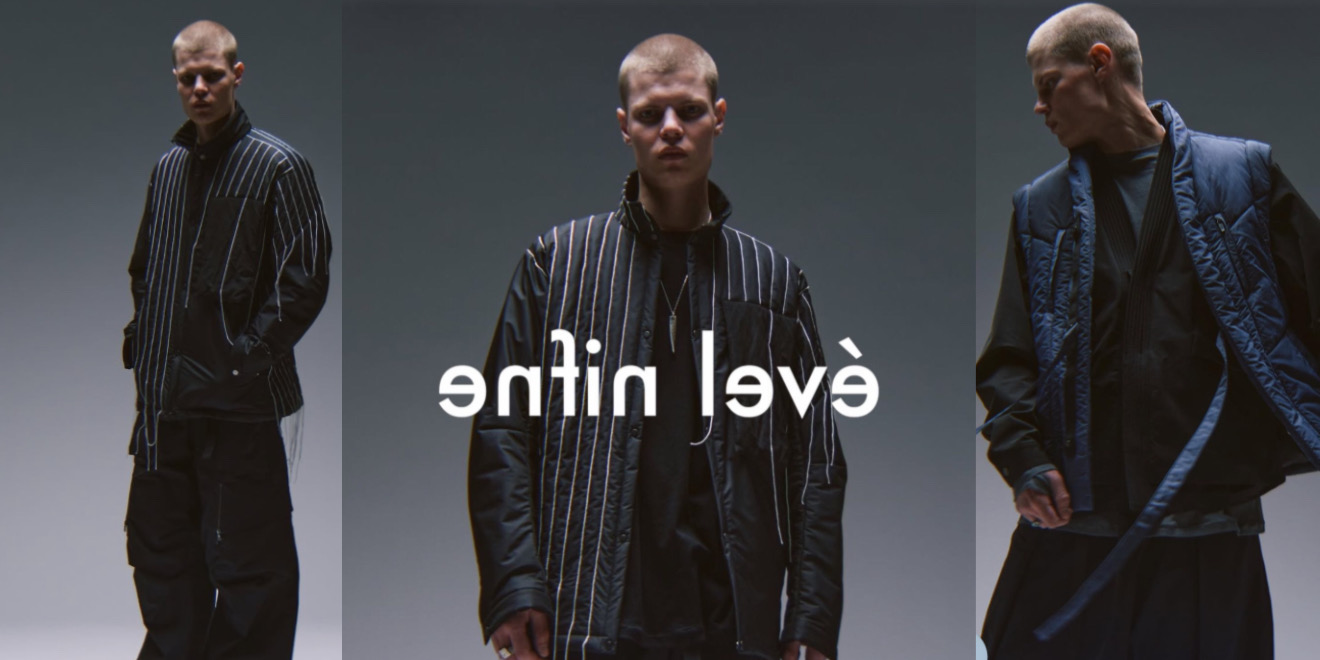
Anton Kundrus for enfin levé - Edge and Minimalism Meets High-Performance Fashion

Model Agency Casting on 22 June in Berlin Mitte: Pre Fashion Week Berlin
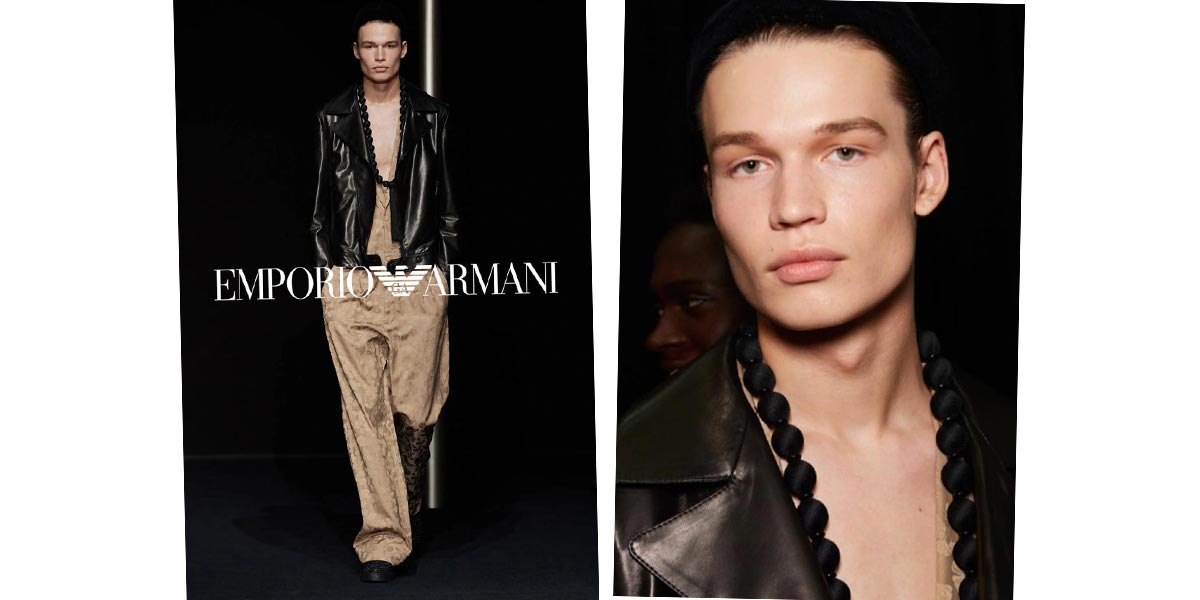
SS24 Men: Artur steals the show at Milan Fashion Week for Emporio Armani!

Philipp Plein Milan Fashion Week FW24/25 Show x Diego Pooth

Insider: Impressions from our model casting!