Top 10 Fashion Designer Germany
Who wants to be taken seriously in the fashion industry must know where the impulses come from — and Germany has delivered far more than most outsiders realize. Not loud, not frivolous, but with a precision that Paris respects and New York imitates. German fashion design is not a footnote in fashion history. It is an independent style approach that has merged minimalism, craftsmanship, and conceptual thinking into a global design language — and continues to shape what is considered “modern” on runways today.
The Design Philosophy Behind the German Style
While Paris focuses on opulence and Milan on sensuality, the German design philosophy consistently works with reduction. This is not frugality — it is a clear stance. Forms are not decorated, they are perfected. This philosophy originates from a design tradition that has never seen function and aesthetics as opposites. The Bauhaus was not a fashion school, but its DNA is present in every German tailor who cuts a blazer.
Function as an Aesthetic Principle
German designers work with the body, not against it. Silhouettes emerge from the question of how a piece of clothing feels — not just how it looks in a photo. That sounds obvious, but in an industry full of stage costumes, it’s a radical position. Anyone interested in runway and catwalk will immediately recognize: German collections move differently. The wardrobe breathes with the wearer.
Intellectual demand instead of trend obedience
German fashion houses don’t build collections around Instagram feed mood boards. They develop concepts — and remain true to them across seasons. This consistency makes them harder to access, but more enduring. A piece from a strong German collection doesn’t lose its relevance after five years. It gains it.
The names that have shaped the world
There is a handful of individuals without whom the global fashion industry would look very different today. No marketing, no exaggeration — pure influence on design language, working standards, and brand management.
Karl Lagerfeld: The Translator
No other designer has connected so many houses, so many eras, and so many markets. Lagerfeld did not see Chanel as a museum, but as a living grammar — and he spoke it fluently in jeans, couture, and streetwear. His strength was not a single style, but the ability to deconstruct and redefine every style. Anyone who follows the Big 4 Fashion Weeks recognizes his influence in nearly every second show — in the way accessories become statements.
Jil Sander: The Pioneer of Silence
Jil Sander has redefined luxury: not as excess, but as precision. A pair of trousers that fit perfectly. A coat that needs no excuse. This aesthetic has created its own customer segment — people who understand quality and reject noise. Her influence on what is now marketed as “quiet luxury” is direct and undeniable. No trend has contradicted this attitude so far — and none will.
Hugo Boss: Uniformity as a Brand Identity
Hugo Boss is a special case in German fashion history: a name that became a category. The suit as a status symbol, men’s ready-to-wear as an identity signal — Boss has industrialized and internationalized these codes. What began in a Swabian tailoring workshop is today one of the world’s most revenue-generating fashion companies. Structure, reliability, recognizability: these are not compromises, this is the product.
Comparison: German designers and their global positioning
| Designer / Brand | Core Aesthetic | Target Market | Lasting Influence |
|---|---|---|---|
| Karl Lagerfeld | Eccentric, media-friendly | Couture + Mass Market | Brand leadership, collaborations |
| Jil Sander | Purist, minimalist | High-end segment | Quiet Luxury, tailoring |
| Hugo Boss | Clean, masculine structured | Business, Premium | Men’s fashion standard globally |
| Wolfgang Joop | Romantic, expressive | European market | Prodigy label, women’s fashion |
| Escada | Glamorous, color-intensive | Luxury women’s fashion | International expansion |
What Germany Contributes Structurally to the Fashion World
Beyond designer names, there is an infrastructure that is often underestimated. Germany is not only the homeland of important designers — it is a location for production, education, and trade. Anyone visiting a model agency in Berlin realizes immediately: this city is not a copy of Paris, but an independent creative hub with its own rules and talents.
Berlin as an Alternative
The Berlin Fashion Week was conceived from the beginning as a platform for labels that reject the luxury system — sustainable, conceptual, experimental. This has brought it mixed international criticism, but also a loyal fan base of buyers looking for alternatives. Hamburg, on the other hand — home to Jil Sander and several strong agencies — represents cool Northern German style: discreet, high-quality, without shouting. A model agency in Hamburg often works with this aesthetic code, which is directly reflected in the castings.
Education and New Talent
Germany has strong fashion schools — but even stronger is the system of agencies, castings, and local productions that integrates up-and-coming talents early into real work processes. Those who want to know how this works in practice and what it means to become a model will find a structured industry system — with clear requirements, traceable standards, and realistic income expectations. The question of how much a model earns can also be answered more transparently in Germany than in many other markets. Those who are also interested in international perspectives should also be aware of modeling abroad as an option.
“The German market doesn’t produce models for the German market — it produces models for the world. Whoever succeeds here succeeds everywhere.”
Checklist: What a serious up-and-coming designer must understand
- ☐ Treat German design history as required reading
- ☐ View minimalism as a strategy, not as a compromise
- ☐ Prioritize craftsmanship over trends
- ☐ Use international Fashion Weeks as a learning field
- ☐ Know agency structures and booking procedures
- ☐ Distinguish serious partners from unscrupulous ones
- ☐ Sharpen your own positioning early on
International Stages and the German Contribution
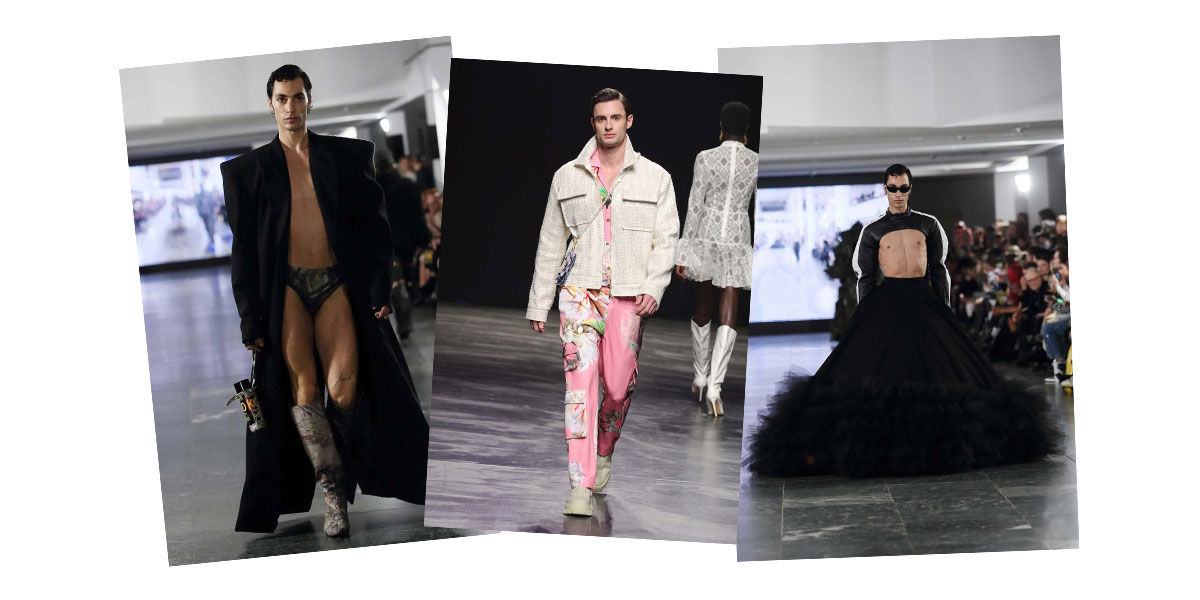
German designers and models are today naturally present on all major runways — Paris Fashion Week, Milan Fashion Week, New York Fashion Week, London Fashion Week. Whoever knows the history of German fashion design understands why: the aesthetics is internationally adaptable, because it does not depend on local trends, but on universal principles.
At the same time, the industry has recognized that diversity in representation is not a PR topic, but a quality feature. Curvy Models and Models in larger sizes are now working with German agencies that treat this as standard and not as an exception. Those who wonder whether a model agency without a minimum size can be serious — yes, it can, if the positioning is right.
For all those who want to take the next step: prepare a casting, create a model portfolio, or present yourself to a reputable model agency — this also works in Germany according to clear, learnable rules. The entry often begins with a simple decision: Apply now.
Which model types the German fashion industry is looking for today
German fashion design has become more diverse — and thus the requirements for models have also changed. Labels like Wolfgang Joop (Wunderkind) deliberately cast character-driven models instead of uniform types.
- Editorial Models: Precise movement, versatility — for campaign shootings and magazine features
- Runway Models: Body control, posture, stage presence — for runway shows on the Fashion Week Berlin
- Commercial Models: Naturalness, broad target audience appeal — for business fashion and advertising
- Curvy & Diversity Models: Strength in body language, self-confidence — for brands that live diversity as a brand value
- Fit Models: Exact measurements for technical fittings in the production process
“The next generation of German design houses will not cast for one-size-fits-all types. They will cast for posture. Whoever brings a clear personality always has a chance.”
Anyone who wants to realistically assess their chances should inform themselves about the current model measurements and requirements. A serious model agency will always evaluate the overall picture. The first step remains a professional model portfolio for casting — the calling card before the first conversation takes place.
Common questions about German fashion designers
Which German designers have the greatest international influence?
Karl Lagerfeld and Jil Sander are the most frequently cited German designers internationally — Lagerfeld through his work at Chanel and Fendi, Sander through establishing modern minimalism as a luxury category. Hugo Boss has structurally changed the men’s fashion industry. All three have set standards that are globally valid and still serve as references in design education today.
What distinguishes German fashion style from French or Italian?
French fashion works with seduction and lightness, Italian fashion with sensuality and craftsmanship pride. German fashion style prioritizes structure, concept, and function. The result is often more strict in expression, but longer-lasting in effect. Pieces from strong German collections rarely age — they mature.
Is Germany as a fashion location internationally competitive?
Yes — with clear specialization. Germany does not compete with Paris in the couture segment, but it dominates in the areas of sustainable design, business fashion, and conceptual young design. Berlin is increasingly positioning itself as an alternative to the classic fashion centers, while Hamburg and Munich offer strong agencies and production networks.
How can aspiring models benefit from the German design tradition?
Who understands the aesthetics for which German labels cast has a measurable advantage in booking. Minimalist looks, clear movements, and a sense for tailoring — these are skills that can be trained. Those who also understand how to model part-time works and which top model agencies are active in Germany can build strategically.
As one of the leading model agencies in Germany, CM Models regularly works with the most well-known fashion brands and their campaigns. Do you want to become a model yourself or book a model for your next campaign here? Apply for free now here.
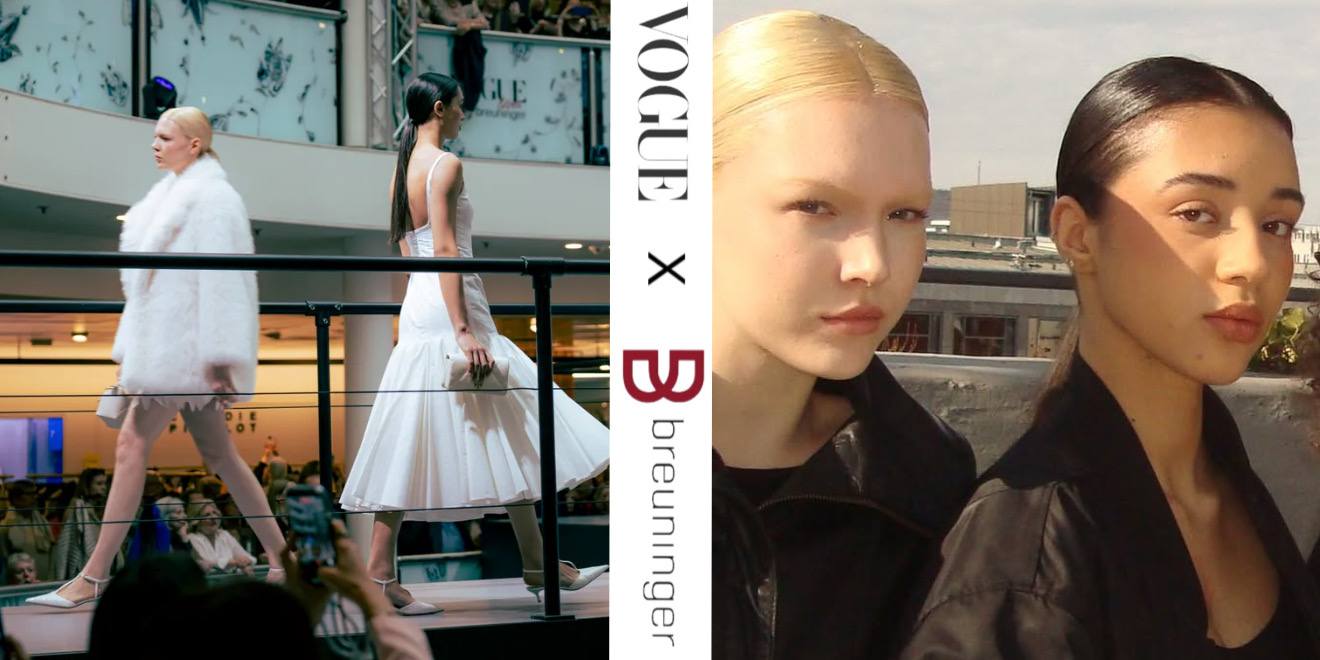
Runway Debut: Ariane and Luisa for Vogue x Breuninger

Artur Ritter für Adidas Running x Courir - Model in Paris
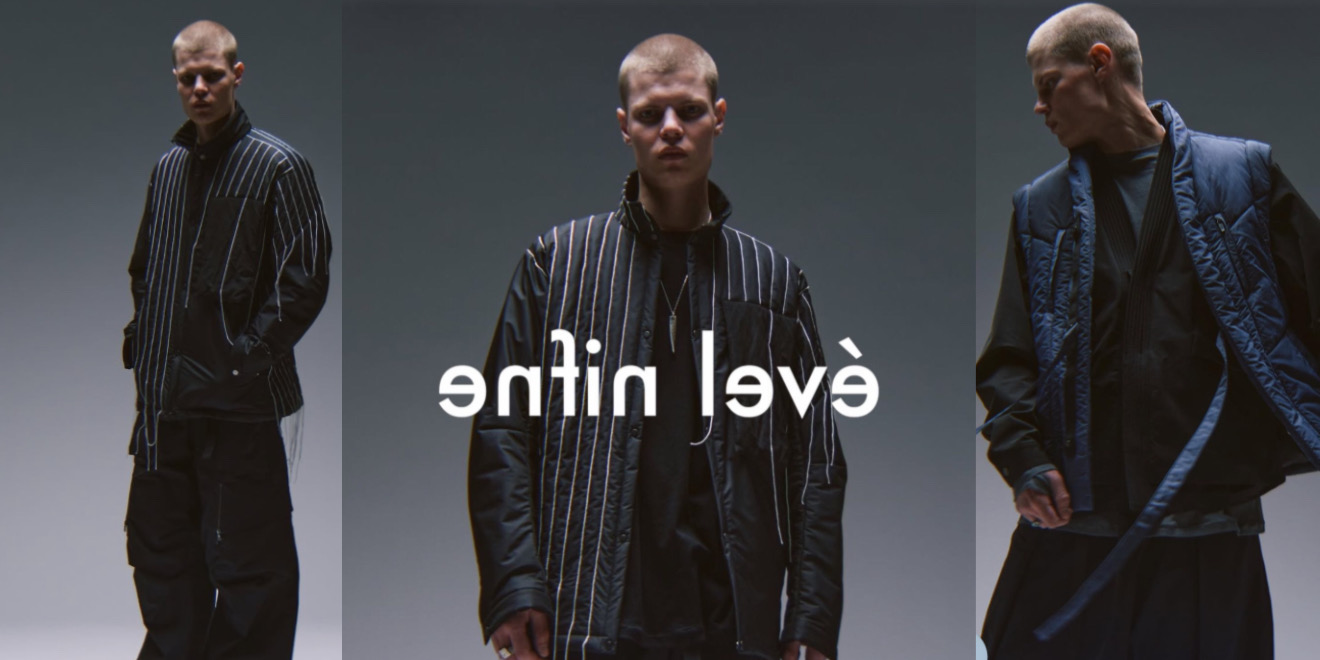
Anton Kundrus für enfin levé - Edge und Minimalismus trifft auf High-Performance Fashion

Char Goodrick for the Puma Middle East campaign - When cool models are meeting cool brands

Modeln in Südkorea: Mathis shootet für Adidas x MUSINSA in Seoul

Clara in Sweden for MAYZ: #1 Collection - "Ode to the Ocean" + Video